

Raw material optimization is a key strategic element that impacts our ability to control material costs in today’s economic environment. While we may not be able to control the cost of materials, we can control how efficiently we use raw materials. Two recent projects in MIPS are generating savings through optimized raw material usage while supporting Mauser’s commitment to environmental sustainability.
Project #1:

Location: Gebze, Turkey
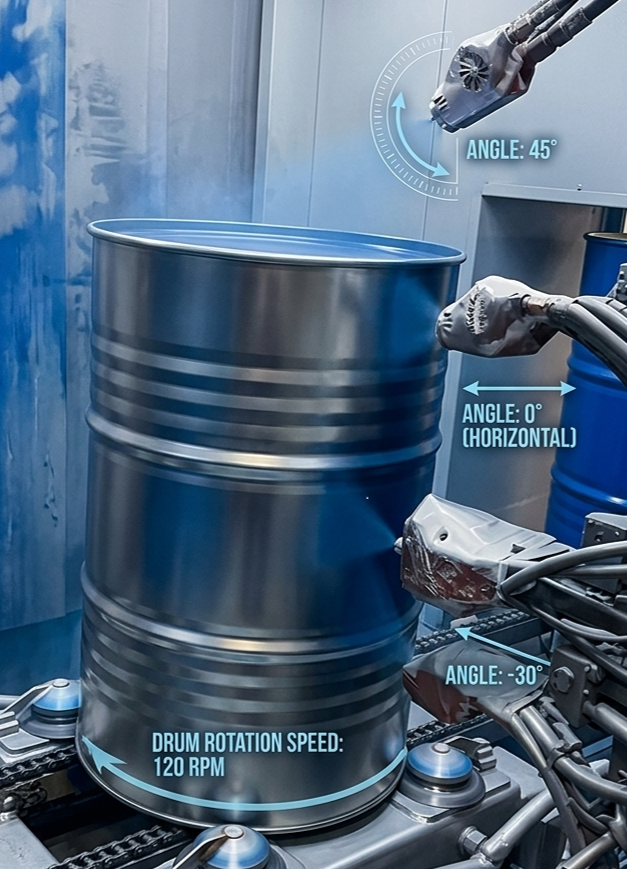
Functional or Operational Area: Painting Station
Objective: Lacquer and paint grammage optimization
Result: Reduced paint and lacquer consumption by improving coating application efficiency and implementing standardized processes
Project #2:
Location: Littleborough, U.K.
Functional or Operational Area: Drum Blow Molding
Objective: Reduce masterbatch usage
Result: Reduced usage by determining minimum masterbatch required to meet customer quality requirements and setting color standards to be used by operators
Need to know terminology: A masterbatch is a concentrated mixture of pigments, additives, or fillers encapsulated in a carrier resin. It is blended with natural resin during processing rather than adding raw pigments or additives directly into the manufacturing process.
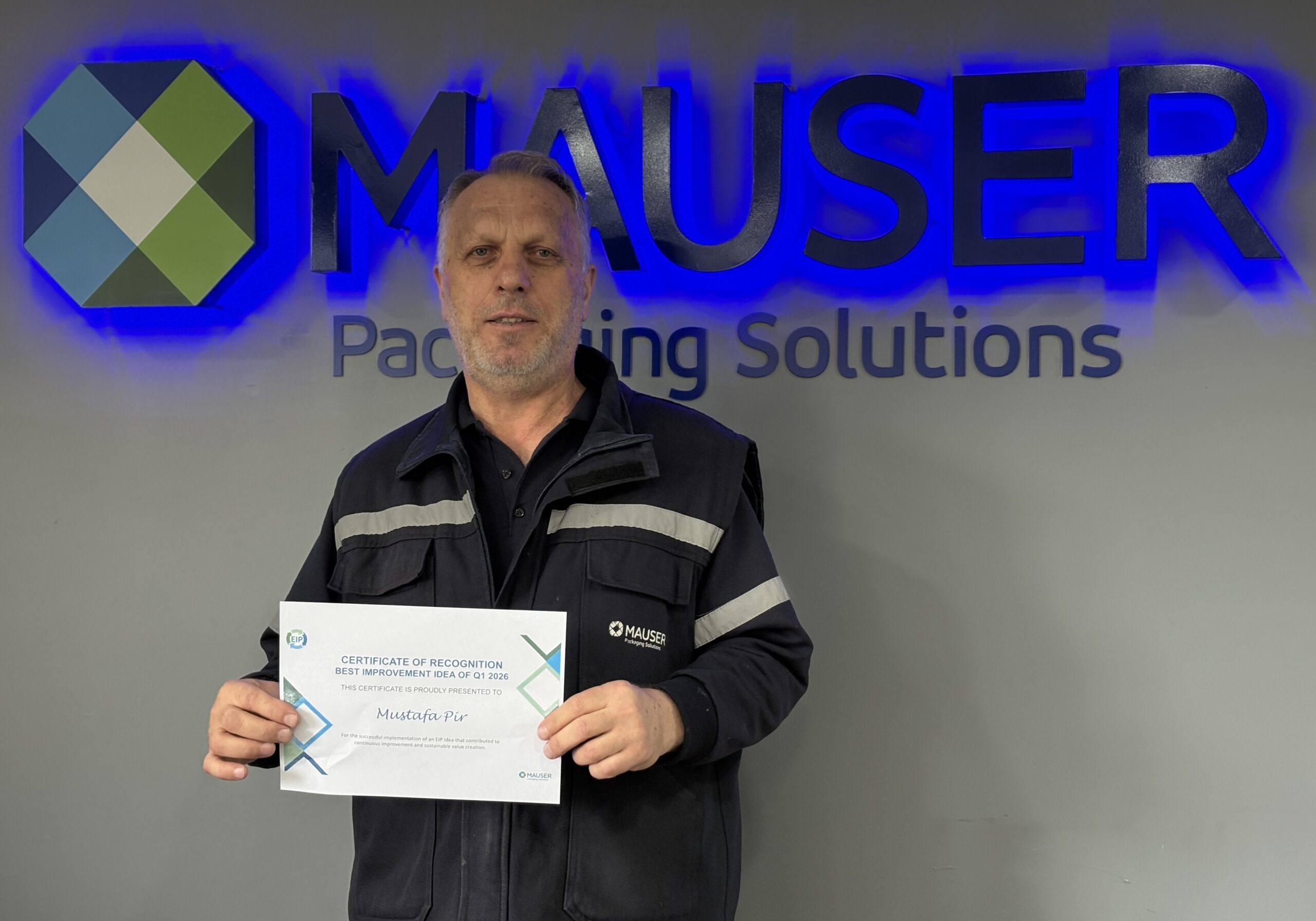
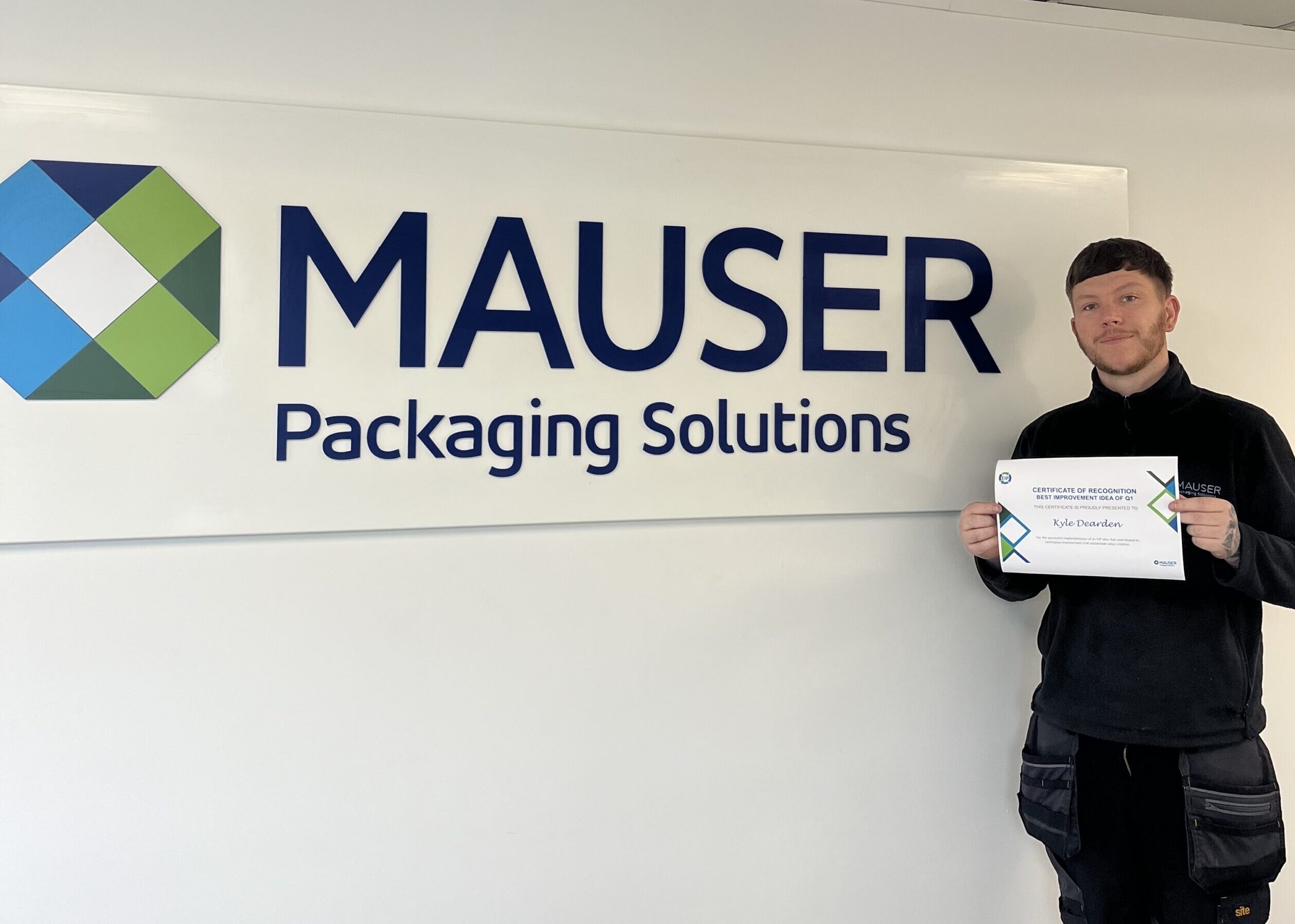
At the Littleborough, U.K. Plastic Drum manufacturing facility, Kyle Dearden (Process Technician) identified an opportunity and worked to optimize masterbatch usage in the drum blow molding process. Over a two-week period, he gradually reduced masterbatch levels, a concentrated blend of pigments and additives used to color and enhance plastic resin, while closely monitoring product quality to ensure quality standards for a negative impacts.
The trial demonstrated that the masterbatch setting could be reduced from 4% to 2.2% without impacting product quality or performance. Based on these results, new standards were set for use across the shop floor resulting in approximately 31.9g of masterbatch saved per drum. This project demonstrates the significate gains that can be achieved through problem solving.
Other recent notable MIPS EIP projects:
Lucas Calabres (Matão, Brazil) implemented conveyors to automate the movement of RECO drums, eliminating manual handling. By improving ergonomics, he reduced labour requirements by two operators.
Hercules Xu (Singapore) addressed customer complaints related to drum height instability and surface quality after the post-cooling process. By redesigning the cooling process to ensure full surface cooling and optimizing parting line shrinkage, the team reduced scrap and improved surface quality.
Guillaume Hoynant (Creil, France) optimized wrapping film usage by reducing thickness while improving quality and cost efficiency. This initiative decreased customer complaints, reduced stoppages, and improved OEE.
Alexander Tempelaars (Oosterhout - Netherlands) implemented production line upgrades to increase output enabling the site to meet demand and unlock additional production capacity.
Call to Action
At Mauser, continuous improvement is part of our culture. Since implementation, the Earning Improvement Program (EIP) has been crucial in maintaining our financial stability while enhancing safety, collaboration, efficiency, and sustainability.
Your involvement is essential at every stage of the EIP process, from idea generation to implementation.
We've seen significant value where EIP has been embraced, but there's still untapped potential. Submit your ideas and help implement them to drive Mauser forward. Together, we can make a significant impact.